

 日本語
日本語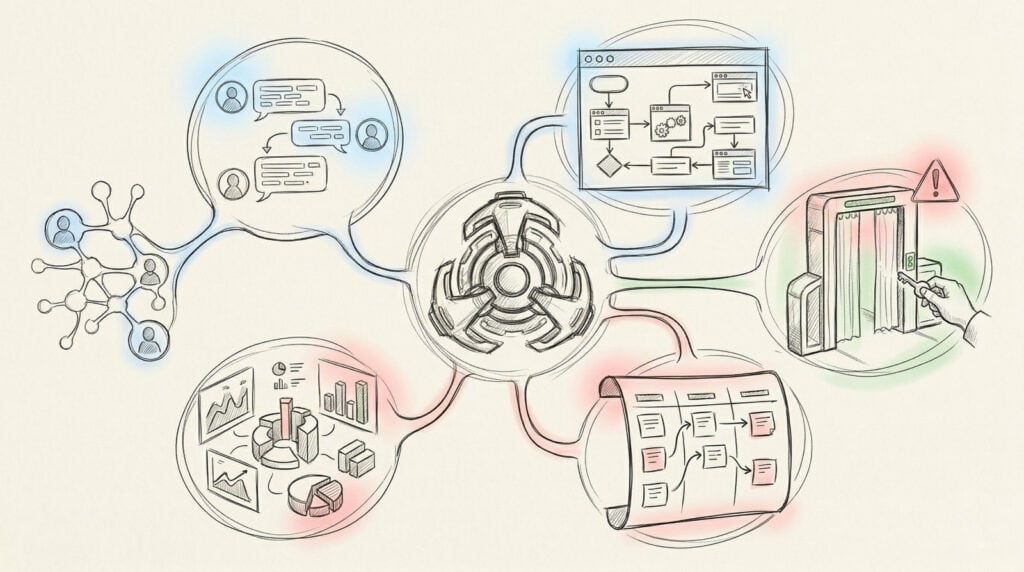
Four weeks. Four articles. The first captured the initial surprise — AI embedded in Slack rather than sitting behind a separate URL. The second covered the setup decisions that most tutorials skip. The third traced what happened when browser automation entered the picture. This final piece is an honest accounting of what the full experience yielded: who actually benefits from a system like this, who does not yet, and what the overall verdict is.
What OpenClaw Actually Is
The most accurate description, after sustained use: OpenClaw is an agent platform, not an AI product. It is the infrastructure layer on which you build an AI-integrated workflow. Which language model handles conversation, which handles memory indexing, which external systems get access and to what extent — all of it is operator-defined. The freedom is real and substantial. So is the responsibility it implies. For people who understand that distinction and are comfortable operating within it, OpenClaw opens up a genuinely different category of capability. For those expecting a finished product, it will frustrate.
Who This Is For — and Who It Is Not
The profile that extracts consistent value: someone with solid computer literacy who is comfortable in terminal environments, who thinks about system permissions rather than ignoring them, and who treats optimization as an ongoing activity rather than a one-time setup task. The appeal is not simplicity — it is the depth of customization available to someone willing to engage with that complexity.
The profile for whom this is premature: someone who copies configuration steps from documentation without fully understanding what those steps authorize, someone who assumes that if a system is offered as a service it must be safe, or someone who would grant broad file and email access without thinking carefully about what that access actually means. OpenClaw is not forgiving of that approach. A misconfigured permission set does not announce itself with a warning — it quietly exposes data that was never intended to leave a controlled environment. The risk is real and the feedback loop is slow.
What Worked
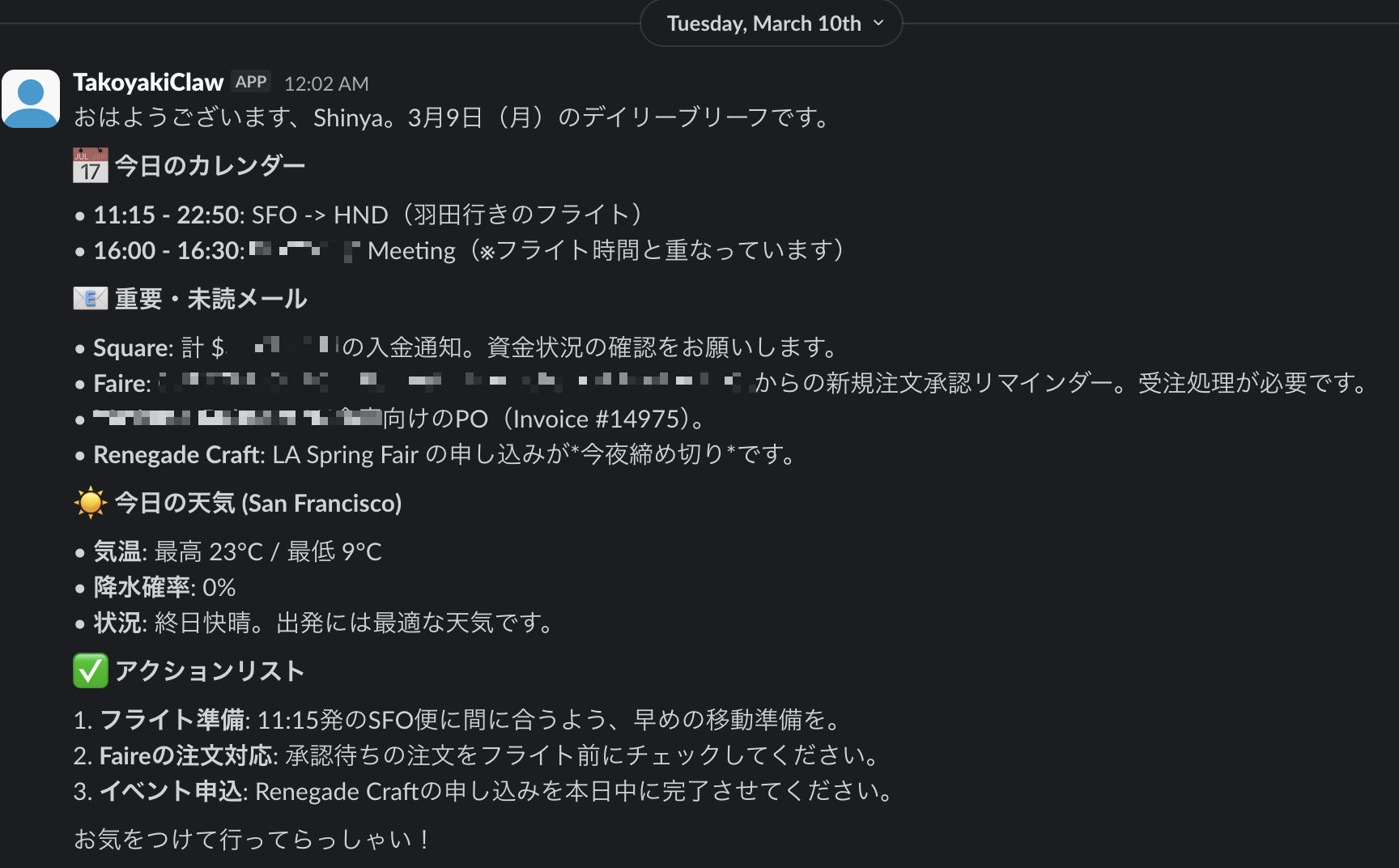
The morning briefing has become a genuine part of the daily workflow — calendar, overnight email, weather, priority ordering, delivered to Slack before the first work session. What makes it useful is not that it saves time on any individual task. It is that it removes the friction of context assembly at the start of the day. The information that previously required opening four separate applications arrives pre-synthesized.
Browser automation extended that further. The restocking workflow — inventory check, sales trend review, reorder calculation, draft purchase order — now runs as a connected sequence rather than a series of manual steps. When you watch an agent navigate through a cloud accounting interface, retrieve data, and produce a coherent draft email, the word “agent” stops feeling metaphorical. This is the transition from AI as a tool you consult to AI as a participant in the workflow. For organizations evaluating what that transition actually looks like in practice, the QuickBooks use case is a useful reference point.
What Frustrated
Rate limiting is the most persistent operational friction. Token consumption requires ongoing attention, and the optimization problem — which model handles which task at what cost — does not resolve itself. The system requires active management. For teams expecting to configure it once and step away, that expectation will not be met. For teams that treat infrastructure optimization as part of normal operations, it is a known cost of running a capable system.

SaaS Alternatives and the Real Tradeoff
SaaS-packaged alternatives to OpenClaw are emerging. They lower the setup barrier considerably, which is genuine value for organizations without technical staff comfortable with local deployment. The tradeoff is visibility: when a third-party service manages the infrastructure, you lose direct observation of what data flows where, under what conditions, subject to whose terms of service. For mature, established providers, that delegation is reasonable. For newer entrants in a rapidly evolving market — where business models are still forming and data handling practices are inconsistently disclosed — the risk profile is harder to evaluate. The local approach requires more from the operator. It also gives the operator more to stand on if something goes wrong.
The Verdict
After four weeks: it depends on who is operating it, and it is genuinely interesting. OpenClaw is not a product for general deployment. It is a platform for practitioners who are ready to engage with complexity in exchange for the flexibility that complexity provides. Parts of it are already running in daily operations. The browser automation workflow handles a recurring business task every week. The morning briefing runs on schedule. These are not demonstrations — they are operational systems.
What the experience clarified most clearly is not OpenClaw-specific. It is the broader question of how organizations want AI to integrate into their operations — and what governance posture they want to maintain as that integration deepens. The organizations that think carefully about those questions now will be better positioned when the tools mature and the stakes rise. Silicon Valley Japan Lab will continue tracking that frontier from both sides of the Pacific.
Shinya Fujimoto holds degrees in Electrical & Computer Engineering and Computer Science from Carnegie Mellon University. He began his career as a semiconductor design engineer at LSI Logic, working across Japan and the U.S. He has since built and operated businesses across multiple industries on both sides of the Pacific — a design gifts company that reached 600+ U.S. retail locations including MoMA, a Japanese restaurant brand’s first U.S. outpost in California, DX initiatives at a major Japanese insurance group, and a CTO role at a WPP-group agency. In 2025, he founded Silicon Valley Japan Lab to bridge what is happening at the frontier of Silicon Valley with what Japanese organizations need to act on it.